Back to blog
Being a Dad — On the Blue SideWorld Kindness DayacceptanceautismADHDneurodiversityawarenessfatherhood
The Kindness You Don't Even Notice
A father's letter for World Kindness Day: what kindness looks like in a family living with autism and ADHD, and why the quiet gestures mean the most.
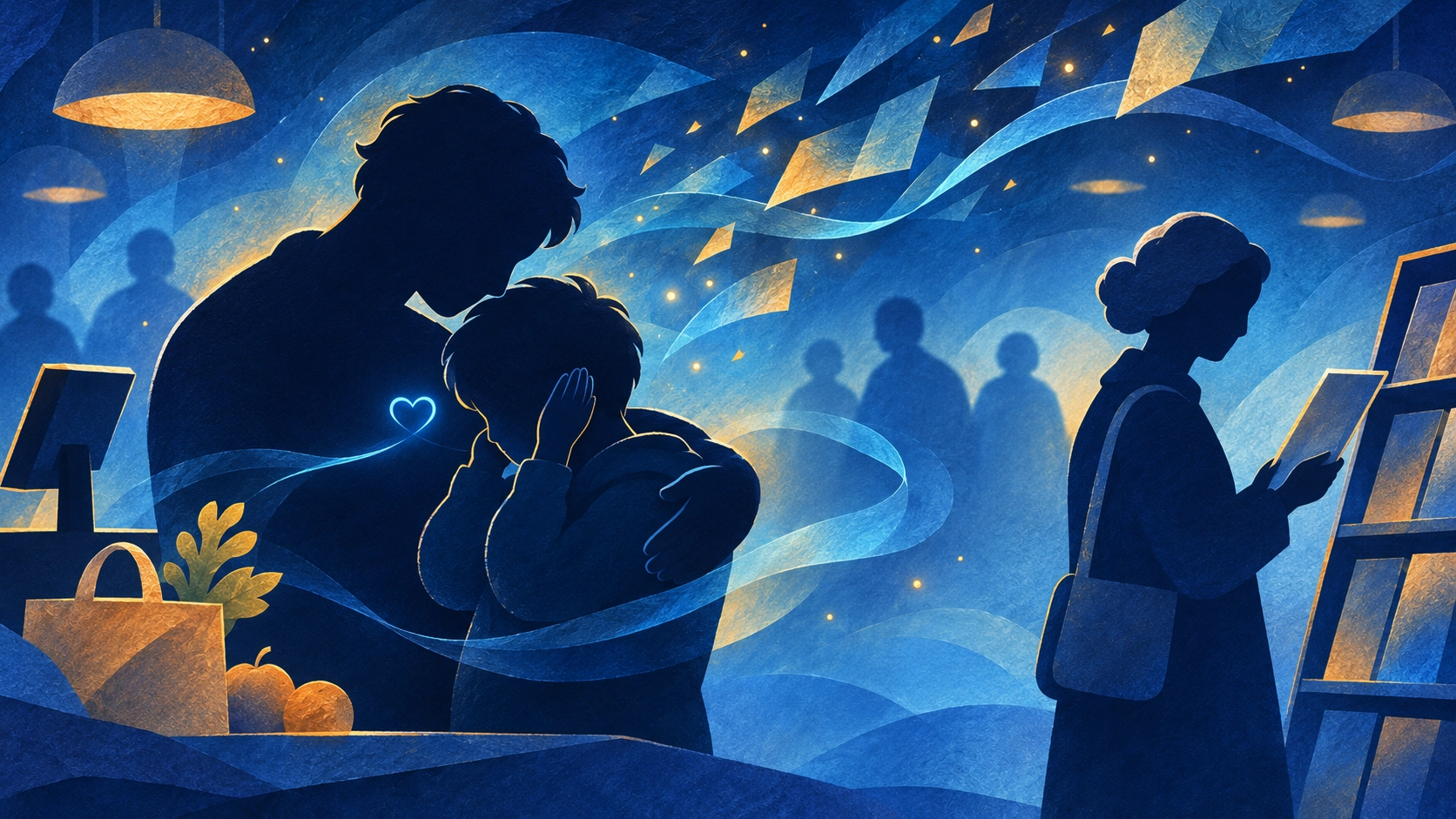
It was a Saturday morning, and the shop was packed.
The tills kept beeping, someone behind us dropped a glass bottle, and the loudspeakers kept directing us towards the self-checkouts. At first my son just turned his head from side to side, then he put his hands over his ears. Then he pressed himself tightly against me, as if asking me to shut the noise out for him.
I didn't say anything. I just stayed there and waited. Meanwhile I could feel the sharp looks on the back of my neck. Sounds familiar, doesn't it? If you've been there, you know.
And then the older woman standing behind us spoke to me quietly, and all she said was: “I'm in no hurry.”
She turned away and began studying the magazines very, very carefully.
That was it. She didn't give advice. She didn't ask what was wrong with the child. She didn't look at us with pity. She simply gave us time and drew attention away from us.
I don't know her name, and I had never seen her before. She probably doesn't even remember us. But I have thought about her ever since.
Friday, 13 November – World Kindness Day
World Kindness Day has been marked around the world since 1998, started by the World Kindness Movement. On this day many people think of smiles, a helping hand, small gifts, and that is just as it should be.
But in a family raising an autistic or ADHD child, kindness sometimes looks quite different. It is often quieter and invisible. Sometimes it consists precisely of what someone doesn't do.
That is what I'd like to tell you about.
In our family, kindness is often quiet
When my son's nervous system becomes overloaded, when there is too much sound, light, too many people, too many surprises, from the outside it can easily look like a tantrum. But it isn't. He isn't trying to get anything out of it. Often he doesn't know himself why he feels this way, and that makes the situation even harder for him. He has simply taken in more than he can process in that moment. (If you're wondering why a single sensation can feel so intense, I wrote more about it here.)
At times like this, even good intentions can be too much. A loud “What's wrong, little man?”, an unexpected pat on the head, a well-meant tip from someone in the queue: each one is yet another stimulus, topping up a glass that is already overflowing.
That is why, for us, the greatest kindness is so often silence, space and time.
Small gestures that mean everything to us
You don't need to be an expert to be kind to a neurodivergent family. Sometimes this is all it takes:
- Not staring. A brief, friendly glance is fine, but a long, judging look is harder to bear than you might think.
- Asking before you help. “Can I help with anything, or would it be better if I left you to it?” That sentence is worth its weight in gold. And if the answer is that you'd better leave it for now, that isn't a rejection. (That is what my “May I Hug You?” letter was about, too.)
- Not giving advice. Believe me! We've heard it all already, and we've tried most of it, too. We would be so much happier if anything actually worked in those moments.
- Being patient in the queue. A minute is nothing to you, but for us it is the difference between pulling ourselves together and having to flee.
- Speaking to my son as a child. If he doesn't look you in the eye, he isn't being rude. If he answers later, it doesn't mean he isn't listening. Give him a little time.
- Inviting him to a birthday party. This may be the greatest kindness of all. An invitation from a classmate or their parents is often worth more than any fine words about acceptance.
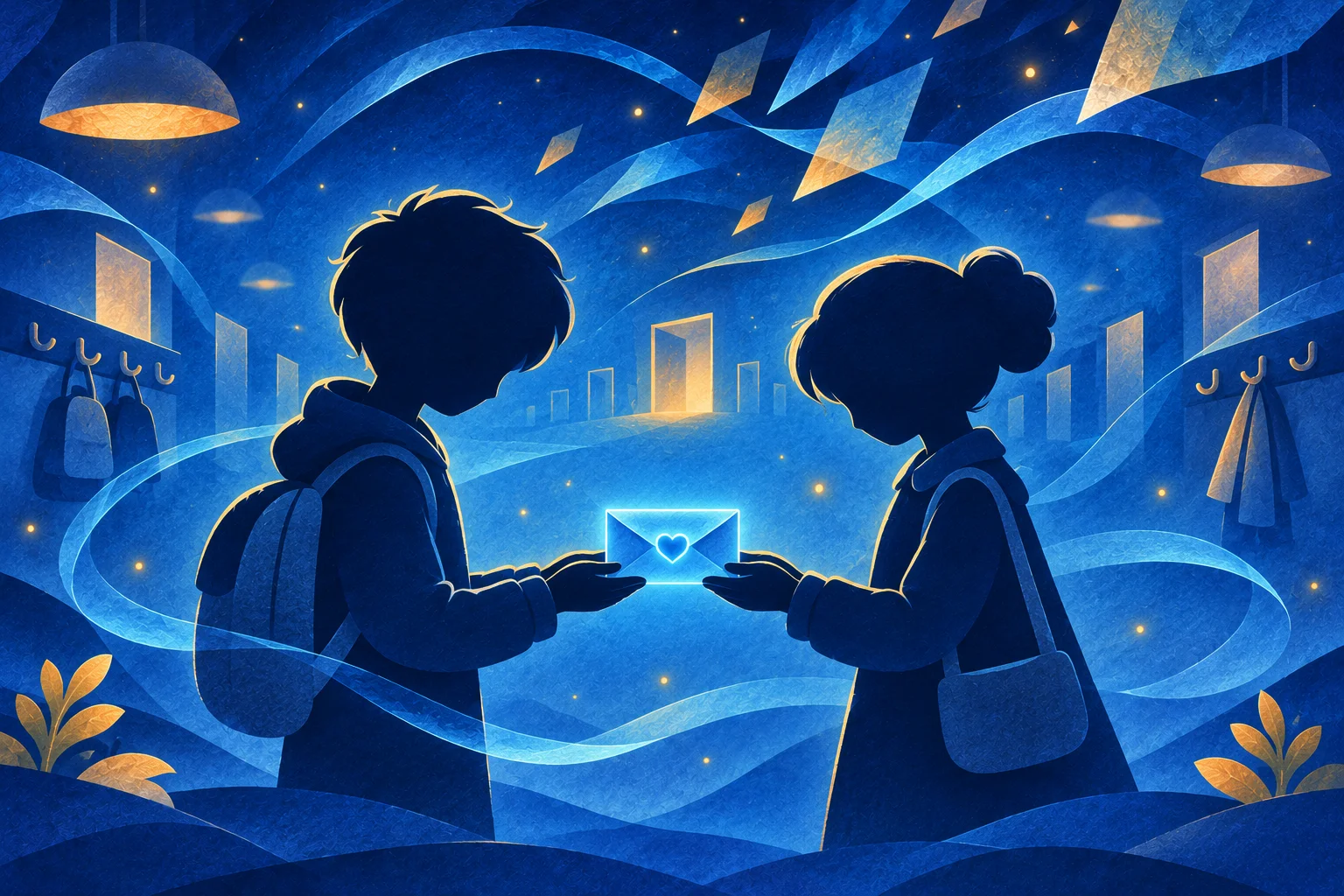
None of these costs money, and none of them takes courage. Only attention and acceptance.
Kindness is not pity
It is an important difference, and I want to say it out loud: pity is not what we're after.
We aren't longing to hear “oh, the poor things, it must be so hard.” What we want is for my son to be able to be himself in the shop, at the playground, on the tram. Just as anyone else can be themselves. Sometimes louder, sometimes quieter, sometimes differently. A child, in his own way.
Pity opens a gap and creates distance; kindness builds a bridge.
And the kindness we turn inwards
There is a kind of kindness we rarely talk about: the kind we practise towards ourselves.
As an ADHD dad, I know them all well: the forgotten PE bag, the message left unsent, tomorrow's deadline that only comes to mind at ten in the evening. And that inner voice too, the one that is not exactly kind at moments like these.
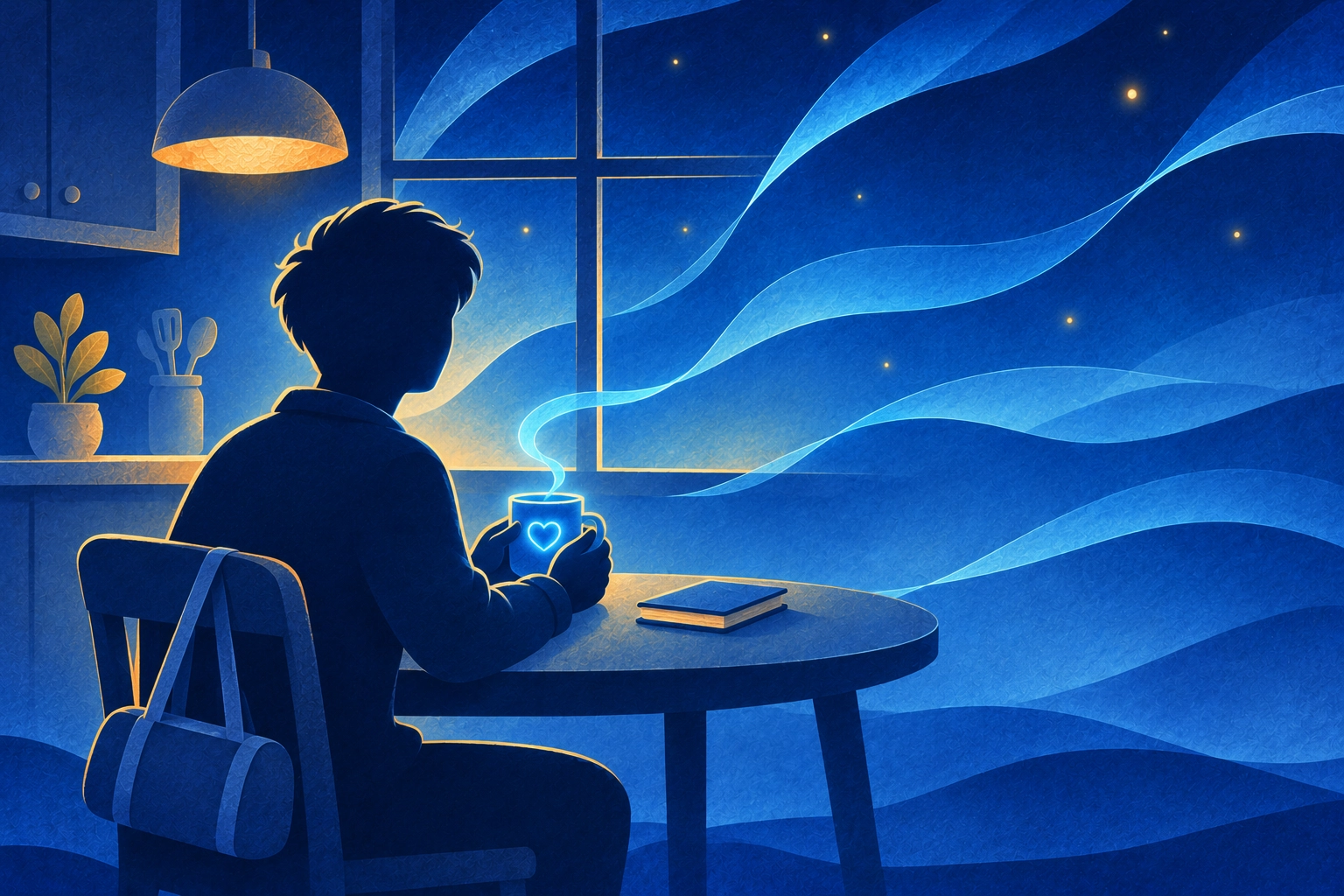
That Saturday in the shop, it wasn't only hard for my son, but for me too. And perhaps the most we can give ourselves at times like that is the same thing the older woman gave us. A little time. An “I'm in no hurry.” A moment without judgement.
As parents, we deserve that too.
Not just today
World Kindness Day is just one day on the calendar, but the kindness I've written about here is no special occasion. Monday morning on the bus, Tuesday at the parents' evening, Wednesday at the shop, the chance is there just the same.
Next time you're standing in a queue and the child in front of you is holding their ears, or pressing tightly against their parent, maybe this piece will come to mind.
You don't have to do anything big. This is enough: “I'm in no hurry.”
And then feel free to study the magazines or the sweets.
Have you ever had a moment when a stranger's small kindness got you through a hard situation? Or were you the one who quietly gave someone time? Tell us in the comments — I'd love for these stories to find each other.
If you'd like as many people as possible to read this, share it, and follow us on Facebook.
Kindness also has a very tangible form: the Blue Heart Ride takes four neurodivergent children to school and back home every school day, free of charge. If you can, support our fundraiser — or just tell someone it exists. 💙
Oszd meg:Facebook